Homily September 6 2026
Feast of the Creator

Christina (Tina) McKinlay
September 9, 2026
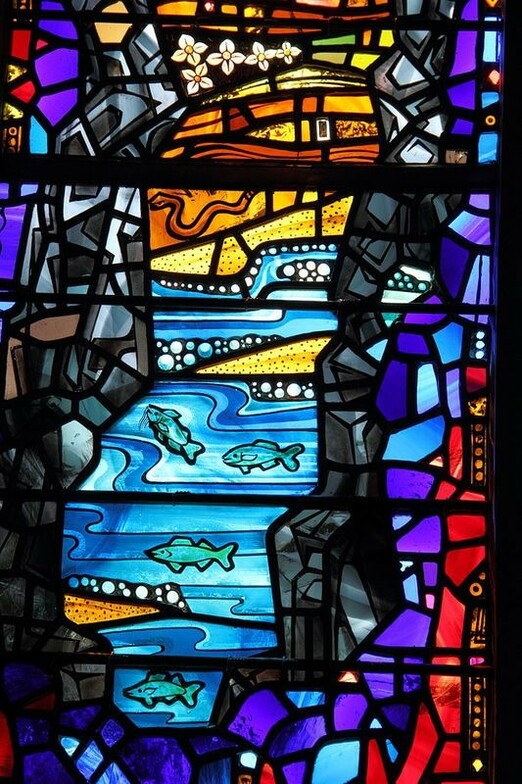
‘Creation of the World’
Feast of the Creator
Year A, 6 September 2026
One day a group of scientists got together and decided that humanity had come a long way and no longer needed God.
So, they picked one scientist to go and tell God that they were done with Him. The scientist walked up to God and said, "God, we've decided that we no longer need You. We're at the point that we can clone human beings and do many miraculous things, we don't need you here anymore, you can go your way."
God listened very patiently and kindly to the man. After the scientist was done talking, God said, "Very well, how about this? Let's say we have a man-making contest?" To which the scientist replied, "Okay, great!" But God added, "Now, we're going to do this just like I did back in the old days with Adam." The scientist said, "Sure, no problem," and bent down and grabbed himself a handful of dirt. God looked at him and said, "No, no! You go get your own dirt!"
This joke reminds us that in our pride, we think that we can control creation and do with it as we will; but today, as we gather to celebrate the Feast of the Creator, we are reminded that all creation is a sacred gift from God, entrusted to our care—and not simply a resource to be exploited.
As stewards of creation, we are all called to “cultivate and preserve” the earth (Gen 2:15).
This stewardship is not merely about environmental management but reflects a deeper spiritual vocation: to live in harmony with creation, respecting its rhythms and gifts, and fostering justice and peace in human relationships as part of God’s plan. Like a seed buried in the soil, our small acts of care and hope can bear fruit for the world, echoing Christ’s own life, death, and resurrection. (Jn 12:24)
As we celebrate the Feast of the Creator, let us remember that creation is not merely a backdrop to human activity but a partner in God’s plan of salvation. Our call is to cultivate, preserve, and rejoice in the world God has entrusted to us, living as seeds of hope, peace, and renewal for all creation.
In today’s ecological, political and social context, the world cries out for attention—the effects of human-caused climate change are all around us to see—prolonged droughts, unprecedented wildfires, stronger and more frequent storms—events that cause pain and suffering not only to us—but to creation itself—as biodiversity declines, eco-systems implode, and the continuation of life itself imperilled.
Given the magnitude of the challenges, it would be easy to throw up our arms in despair and become paralyzed in inaction—after all, what can any one of us do that will make a difference?
I am reminded of the Polynesian parable about an old man walking on a beach who comes across a young girl throwing starfish stranded on a beach back into the ocean. ‘Why are you throwing starfish back into the ocean foolish girl. What difference can you make—don’t you know there are hundreds of starfish stranded on this beach? You can’t save them all.’ The young girl responded—'but I made a difference for that one.’
Like the young girl, our response should be one of hope and practical action, inspired by the Spirit of God, who transforms deserts into fruitful fields and brings justice to the land (Is 32:15-18).
Even small efforts can contribute to the renewal of creation.
In our first reading from Proverbs, we hear that God’s wisdom permeates every part of creation. No part of the world is untouched. Everything is shaped by this wise hand. Wisdom shines, in the seas and in the springs that abound with water; in the mountains and hills which tower over us.
God’s wisdom encompasses the whole world, the entire universe. It can only be human foolishness then not to stand before God’s creation in awe and reverence and assume our responsibility as stewards of creation with seriousness and thanksgiving.
Our readings from Colossians and the Gospel of John remind us that Jesus Christ, the pre-existent Word, sustains all things, and through His death and resurrection, God reconciles all creation to Himself (John 1:3; Col 1:17-20).
May our worship today inspire both gratitude and action, honoring God’s gift of creation and sustaining the life entrusted to our care. Amen.