Friday Focus, October 23, 2026
Feast of St. James of Jerusalem

Christina (Tina) McKinlay
October 22, 2026
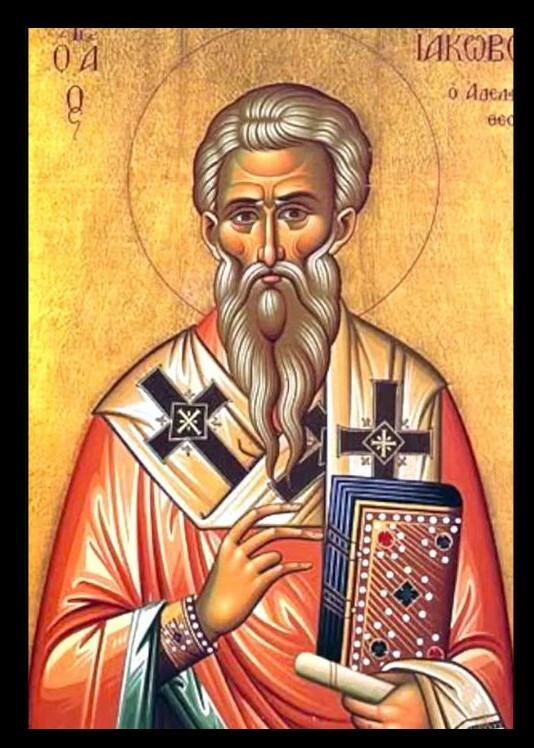
Saint James the Just
Friday Focus, 23 October 2026
Acts 15.12-22a, Matthew 13.54-58
Feast of St. James of Jerusalem
Today the church rejoices and gives thanks to God for St. James of Jerusalem, sometimes called James the Just, and sometimes called the brother of our Lord.
James was a man who was just, compassionate, and self-giving. One of the best stories we have of James in the Scriptures comes from Acts 15. This is the first great conflict that we see in the apostolic age of the church.
Paul and Barnabas came up from Judea, where there was a great debate about whether Gentile Christians needed to be circumcised or not. When they arrived, Paul and Barnabas were greeted by the apostles (one of whom was James) and the elders. From there, they debated this matter at length. Now, some people point out that Peter was the first to speak up and this would solidify his importance in the church and his role. But interestingly, although Peter is the one who began this long argument, it was ultimately James who made the final judgment on the matter (Acts 15.19-21).
Not only did James authoritatively articulate the council’s decision — the decision itself was merciful and welcoming to the new Gentile believers in its leniency and grace.
It is perhaps comforting to recognize that disputes and divisions have been part of the church from its beginnings.
The role that James played in resolving the dispute that brought Paul and Barnabas to Jerusalem is instructive to us today.
For James, unity in the essential matters was important but in nonessential things liberty should be allowed. The question before the Council of Jerusalem was whether circumcision according to the Law of Moses was an essential condition to being considered a Christian. To many Jewish followers of the Way, circumcision and following the law were essential for salvation. On the other side of this fight were Peter and Paul and Barnabas.
And Peter, in the verse immediately before today’s reading from Acts, argued that none of those things in the Mosaic law were necessary anymore. He said, “We believe that they will be saved through the grace of the Lord Jesus, just as we will.”
Both sides saw the dispute as one over essentials.
But James recognized that the proponents of circumcision, like we so often do, had confused those things that are customary with those things that are necessary. They had turned what was intended to be an icon (window to God) into to an idol (substitute for God). More important than the outward sign of circumcision was the inward circumcision of the heart that led one to accept in faith that Jesus was the Way to salvation.
In declaring that it was not necessary for Gentile followers of Jesus to be circumcised, James did not reject the law or circumcision for Jewish followers of Jesus; rather he counselled both sides to focus on what was truly essential, allow freedom in non-essentials, and practice charity towards one another in all things.
Very often in church arguments, as is sometimes true in marriages, the issue is not really what it appears to be on the surface. The issue is not the style of worship, for example. The issue is rather that people feel that they’re losing the church they grew up in. But sometimes a church discord can clarify doctrine or can offer the Church what we can call a ‘teaching moment.’
This is an important lesson for us today.
Are we really focused on the essentials of our faith: loving God with all our being, loving our neighbour as ourselves, proclaiming the breadth of God’s grace and mercy in our words and actions—or are we focused on upholding customs and traditions because they are familiar and comfortable?
Today also marks the first anniversary of my induction as your priest. I pray that God will provide us with the grace and wisdom of James as we journey together to love and serve the Lord in this place, always remembering that Christ call us to unity in the essential things, liberty in the nonessential things, and charity in all things.
Norman+
Image:
Saint James the Just