Friday Focus, 7 August 2026
John Mason Neale 7 August Priest, 1866 — Commemoration

Christina (Tina) McKinlay
August 6, 2026
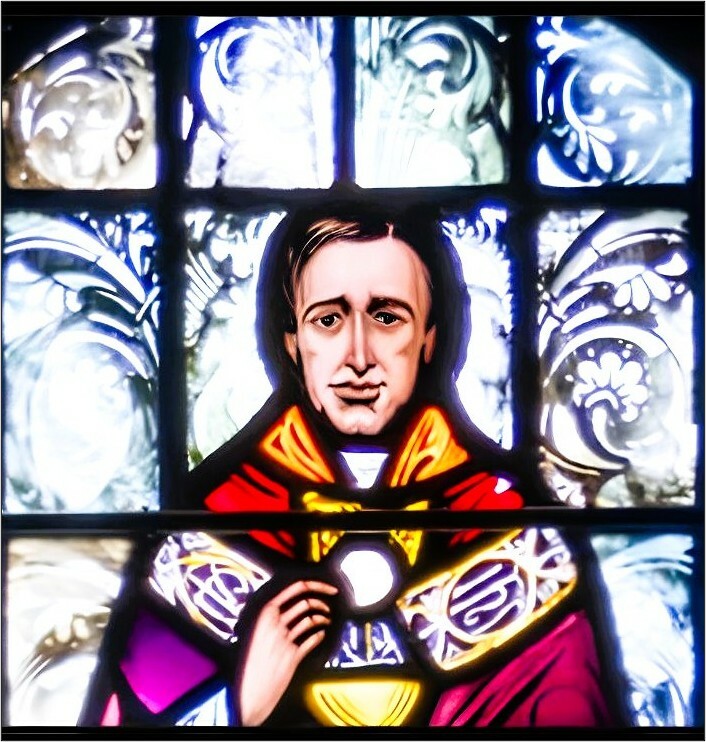
John Mason Neale
Friday Focus, 7 August 2026, John Mason Neale
John Mason Neale
7 August Priest, 1866 — Commemoration
“He’s a closet Catholic!”
This charge came up again and again against the English priest, John Mason Neale, who helped to enrich the devotional life of the Anglican Church in a variety of ways.
John Mason Neale studied at Cambridge and was ordained in 1842. His poor health, however, prevented him from being assigned to a parish. Instead, he was given charge of a poor house for elderly pensioners.
Neale became a champion of the poor. He upset many when he denounced the widespread practice of ‘pew rents’ which allowed the well-to-do to purchase places of prominence in the church in order to be seen and separated from commoners. He aroused even greater anger when he co-founded the Sisterhood of St. Margaret in 1854, an order of nuns in the Church of England dedicated to nursing the sick.
The restoration of religious orders aroused Protestant prejudice against all things Catholic. Neale was mauled at the funeral of one of the sisters, crowds threatened to stone him and burn down his home.
Despite this opposition, the Sisters of St. Margaret prospered under his guidance in its care for the sick, the poor, and orphans in many lands (including Canada) where it established a house at Montreal and for many years staffed a mission in the diocese of Algoma. The important work done by the Sisters soon prompted the creation of many other orders for both men and women.
Their work continues to be a great gift to the church around the world.
Neale was influenced by the Oxford Movement, a renewal that began in the Church of England in 1833.
The leaders of the movement insisted that the Church was a sacred vehicle of divine grace and not merely an instrument of the state. The movement sought to restore a sense of beauty, mystery, and reverence to the life and worship of the Church which — in the wake of the Enlightenment — had become rather dreary and complacent and synonymous with the pretentiousness of the English gentry.
To men like Neale, the Church had simply become the Tory party at prayer.
Neale (and other members of the Oxford Movement) reminded the Church of its responsibility to serve and uplift all people, including the poor, the forgotten, and the outcast.
In addition to his work among those at the margins of society, Neale made important contributions to the hymnody of the Church, translating ancient Latin, Greek, ad Syriac texts into English. It is to Neale that we owe the recovery of such well-loved hymns as:
-
“O Come O Emmanuel,”
-
“All Glory Laud and Honour,”
-
“Christ is Made the Sure Foundation,”
-
“Jerusalem the Golden,”
-
“Sing My Tongue the Glorious Battle,” and
-
“Of the Father’s Love Begotten.”
At the heart of Neale’s life and ministry was a profound sense of the reality and majesty of God — of the challenge to follow Jesus as Lord, especially in service to the poor and suffering — a powerful sense of the beauty of holiness — and a deep reverence for the liturgy and sacraments of the church.
Neale never wavered from these commitments — despite opposition from many church members and leaders unable to see beyond their own prejudice and privilege.
Let us pray:
Grant, O God, that in all time of our testing we may know your presence and obey your will, that, following the example of your servant John Mason Neale, we may with integrity and courage accomplish what you give us to do, and endure what you give us to bear; through Jesus Christ our Lord, who lives and reigns with you and the Holy Spirit, one God, forever and ever. Amen.
Norman+