Friday Focus February 6, 2026
What Is Truth?

Christina (Tina) McKinlay
February 5, 2026
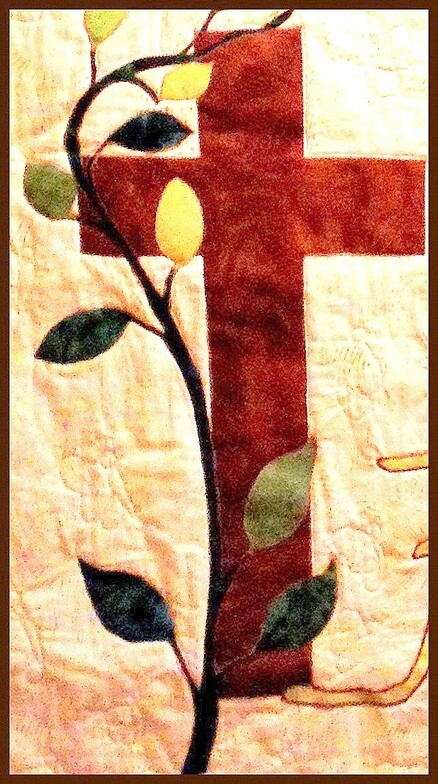
What Is Truth?
Have you ever heard the expression ‘to lose one’s head?’
To ‘lose one's head" is an idiomatic expression that generally means to lose control emotionally or mentally, often resulting in impulsive or irrational actions. It’s not about literally losing your head, but about losing your composure or calmness — sometimes to the point of panic or anger.
Today’s Gospel (Mark 6.14-29) tells the story of how John the Baptist lost his head. But he is not the only one who loses his head. Herod also lost his head. His head was the first to roll. All throughout today’s gospel Herod is losing his head.
-
Herod takes what he wants without regard for other people.
-
He married his brother’s wife.
-
He thinks he can do whatever he wants and the law does not apply to him. John, however, tells him, “It is not lawful for you to have your brother’s wife.”
-
Herod fears the truth tellers and loses his head because he’s overly invested in how others see him and what they think and say about him. Although “he was deeply grieved” when his wife’s daughter asked for the head of John on a platter; “yet out of regard for his oaths and his guests, he did not want to refuse her.”
Once again, he lost his head.
-
He brags about his power and wealth and uses them to reward those who please him and punish those who confront him.
-
He offered up to half his kingdom to the dancing daughter of his wife, and he imprisoned and beheaded John the Baptist.
In all these events, Herod lost his head—he acted irrationally and impulsively and let his feelings get the better of him.
I haven’t done these things, but I know what it’s like to be Herod.
There have been times when I lost my head.
I suppose that’s happened to you too. For me fear, frustration, guilt, grief are often ways in which I lose my head. What about you?
When have you lost your head? How did it happen? What was going on?
When Herod loses his head others suffer.
We see that throughout history. We experience it in our relationships and families. It’s in the news most every day.
John the Baptist, however, loses his head because he called out Herod for what he’d done.
He’s a truth teller.
John puts principle above personality. He holds the king accountable to the law. He speaks truth to power and he pays the price. Herod, however, speaks power to truth. He executes John in an attempt to silence the truth he doesn’t want to hear.
John chose truth. Herod chose power. Both lost their heads.
Truth or power? It’s a choice we make every day. It’s the conflict throughout the world.
Will we speak truth to power, or will we speak power to truth?
Both John and Herod have a relationship with the truth as do you and I.
I wonder what that relationship is for you today. Whose voice are you listening to? When have you been John and when have you been Herod? What truth is guiding your life and where is it taking you?
For what are you willing to lose your head?
I’m asking myself those same questions and I don’t have any good, easy, or clear answers for myself or you.
Most days I’m not even sure any more what truth is. And I don’t think I’m the only one who isn’t sure. Maybe you aren’t either.
Is truth found in the law, our constitution, a Supreme Court decision? Is it in our scriptures? Is it whatever the loudest and most powerful say it is? Is it determined by my needs and best interests? Is it whatever is scientifically provable? Does it have to be historically accurate? Is it the majority opinion? Is it whatever I want it to be and say it is? If you say it enough times does it become true? Is truth absolute and fixed or is it changing and relative? Can there be more than one truth?
What is truth? For most of my life I thought truth was a fact that could be proved, a proposition to be believed, a destination to be arrived at. But what if it’s not any of those things?
Jesus said that he is the truth. “I am the way, and the truth, and the life.”
What if truth is more about a relationship than a fact?
What if it’s not a proposition but an action, a way of being and living? What if it’s not a destination but a starting point? What if truth isn’t something we believe in but something we do? What if truth both reveals something and calls us to do something?
Truth is not partisan. Policies, agendas, and goals are partisan and self-interested, but not truth. Truth is bigger and more generous than that. If it’s not setting people free it’s probably not truth.
We say we want the truth but I’m not sure we can handle the truth. Truth would ask to stand in a place of vulnerability and uncertainty – the same place John the Baptist stood and died. It would confront us with the Herod in our lives. It would hold the pain of the world before us. It would ask something of each of us.
What question is truth asking you to follow and live with today?
How far are you willing to follow that question? Is it worth losing your head over?
Norman+
Friday Focus 6 February 2026 Mark 6:14-29
Image:
km Drayton Valley 2014